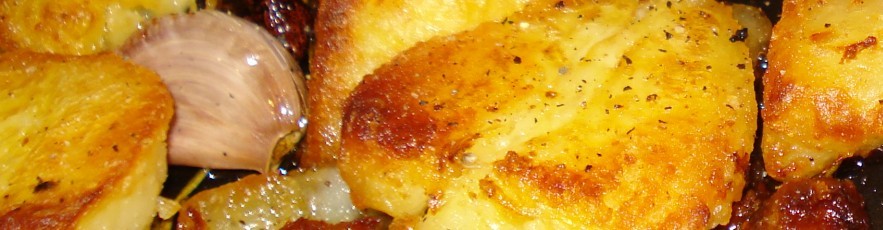
yet more roast potatoes

Patrick's on the left, mine on the right

“Oh look, he’s punting away at potatoes again.” Yes, I am.

During my last venture into the world of perfect roast potatoes, sailing the good ship Jamie Oliver, I unwittingly created a post with a life of it’s own. It’s pulls in lots of hits and a fair few comments too. One of the comments by Patrick Zahara (great name!) boasted of his own technique for perfect roast potatoes. I was suspicious of his ideas but how can I turn down advice on a plate like that?

I was so skeptical that I dedicated two potatoes to the Zahara method, while the remainder went to one of my usual techniques. They were cooked in the same oven at the same temperature, on the same shelf, in two identical baking trays. That way I hopefully gave them both a fair deal, allowing the ideas and flavours to show through.

the two samples ready for roasting

the two samples ready for roasting

The Zahara Method involved boiling the whole potato from cold, skinned and chopped when tender. Then tossed in a little olive oil and salted. Meanwhile for my group I peeled and chunked them, boiled them alongside the peelings until nearly soup, then tossed in pre-heated duck fat. Halfway through I squished gently with a potato masher, tossed with sea salt and pepper, rosemary, garlic cloves and a splash of red wine vinegar. My twist on this occasion was shard of star anise – I wanted a little of it’s exotic perfume and savoury note, but not too much.

So, how were they? The Zaharans were ready much sooner, maybe 15 minutes ahead of mine, browning very quickly. I had the chance to prod and inspect them. They had a shiny, crystalline finish that had a loud tap when rapped. Mine came out their usual rag-tag selves, rippled and nobbly with a shin finish, threatening to fall apart when prodded. When they were finally both ready on the plate side-by-side, they could be properly tasted. The Zaharans had a very hard finish, like the crack of a shop-bought biscuit. The inside was floury and had some taste. Mine for today had a crisp, layered surface with fluffy, fudgy potato filling. As you bite subtle perfumes of garlic, rosemary and the faintest hit of vinegar comes through, and finishes with earthy tones. I’m sorry, but there was no contest here. The levels of flavour, crispiness and all-round satisfaction from my tried-and-tested method made it the clear winner. My criticism for today is that I got wussy on the star anise and couldn’t taste any of it, but I’m scared of it overpowering the potatoes.

One thing I can say in defence of the Zaharans is they were almost certainly healthier. Mine had to wade their way out of duck fat, not great for the ol’ ticker I’m sure. But the taste!

Zaharan potatoes

Zaharan potatoes

Patrick Zahara potatoes:

Maris piper potatoes

Olive oil

Salt

  1. Boil the potatoes whole from cold water.
  2. When tender, peel and chop into chunks.
  3. Toss in a little olive oil and salt and roast in a 200°C oven until crisp, turning once.
roastpotato's roast potatoes

roastpotato's roast potatoes

Roastpotato’s roast potatoes:

Maris piper potatoes, peeled and cut into chunks

Duck fat

Sea salt & white pepper

Rosemary sprigs

2 garlic cloves, bashed but unpeeled

Splash of red wine vinegar

Fragment of star anise (about a quarter)

  1. Boil the potatoes in salted water until nearly falling apart. Keep the potato peelings and put them in a J-cloth or muslin with the boiling liquor and discard when done. Drain and allow to steam-dry for a couple of minutes while you pre-heat the duck fat in a 200°C oven.
  2. Shake the potatoes as much as you dare to chuff up the sides, then tip into the smoking fat.
  3. After 25 minutes, gently squash the potatoes with a masher to open up the sides a little. Chuck in the rosemary, garlic, vinegar and star anise and a generous helping of salt and white pepper.
  4. Continue roasting until browned to your liking (about another 25 minutes).

perfect toad in the hole with onion gravy

toad in the hole

toad in the hole

What would Heston do?

Yorkshire attempts

Yorkshire attempts

This was the question that leaped to mind – and stayed there – when I first read about Amuse Bouche’s post challenging food bloggers far and wide to cook the ultimate Toad in the Hole. For those not in the know, Toad in the Hole is essentially sausages baked in batter. The batter is a Yorkshire Pudding batter, also known as a ‘popover’ in other parts of the world. I felt confident in giving this challenge a good go, as Yorkshire Puddings are something I’ve made since I was very little. My Mum always did a roast for Sunday lunch, and I was in charge of Yorkshire Puddings, often tweaking by adding other bits like stuffing mix or onion powder, but never deviating from the core batter recipe. It’s a recipe I’ve always remembered, and have had people request I bring the batter round to theirs to help with their roasts. It gives me a source of great pride.

When it came to this idea however, I felt it was time to re-evaluate what I knew about this. I thought about how Heston researched his In Search of Perfectionseries: to look at what people expect, and then how best to co-ordinate the meal to bring it together to something approaching personal perfection. When we’re dealing with such a well-known dish as this, I figured his take would be the way to go. To kick it off, what do we start with? There are three elements to come together: the sausage, the batter, the gravy.

The sausage would be relatively straightforward, I don’t have the facility to make my own so it would be a case of buying the best I could afford and doing it justice. A butcher in Chingford does these wonderful onion-flavoured pork bangers -what could be more appropriate? I tinkered with the idea of skinning the sausages and rolling the meaty lumps in crushed fennel seed, but while tasty it started to drift away from Toad in the Hole as we know. So the soss stayed safely in their skins.

onion gravy

onion gravy

With the gravy I wanted to reinforce the pork flavours, so roasted off some pork bones with root veg, then mixed with flour and water to get a thick gravy stock base. Adding more water and seasoning to this at the last minute would make a meaty porcine jus.

And then the batter. Little did I realise how much research could go into this; there is hot debate everywhere as to what is the perfect recipe. It should be puffy and risen, with a slightly eggy chew to the centre. The top should brown deeply and provide a satisfying hollow crispiness. How to achieve this contrast of chewy and crisp then? Delia has her own ideas, so does Yorkshire-born-and-bred James Martin, even the Royal Society of Chemistry has published a woefully unsatisfying guide on Yorkie perfection. After reading dozens of articles, I experimented with a range of batters to achieve the perfect result. I laid out a tin, and poured different mixtures into 12 indentations. There were different concentrations of egg, varying amounts of flour, some with baking powder, some without, some had stood overnight in the fridge, some had stood a shorter time, some stood no time at all. Some had fat pre-heated, some hadn’t. The results were surprising.

When it comes to flour, the evidence points towards the cheapest, nastiest plain flour being the best. So those supermarket brands in their worst packaging will be perfect. I imagine it’s the lack of active gluten, as the strong flours create far too bready a mix. Baking powder seemingly adds nothing (possibly even suspends growth) so no need to add any, nor use self raising flour. Plain flour is definitely the one here. Two rounded dessert-spoons of flour for four individual puddings seems right; pleasingly this amount is pretty much spot on 1oz. (I’m metric through and through, but you can’t ignore convenience like that).

With eggs the age doesn’t seem to make a great deal of difference as it does with meringue, but I found an equal amount of eggs to rounded dessert-spoons of flour gave the right balance of puffiness and chewy bits.

With milk the fattiness seems to have little effect though adding enough to get the consistency of single cream makes the perfect pouring and baking batter. On these lines, I strongly recommend making it in a large jug – pouring stuff into spitting hot fat doesn’t need any more hurdles frankly.

And you must season it – bland Yorkshires are as of air. A dash of soy is nice for an umami quality.

The type of fat was open to debate but served little difference than to change the flavour rather than the finish. I’m choosing to use pork fat from a recent confit to back up the pork flavours. Though it did become clear that the fat should be hot beforehand – the cold fat allowed the dough to just sit there twiddling it’s thumbs while both warmed up.

As for the leave to stand/not stand debate, there is no question that leaving the mixture overnight in the fridge makes for infinitely better results. I’m using cod-Chemistry here but I imagine the refrigeration captures the bubbles in the cold, dense mix and encourages the fluids to meld into the flour to break down any powdery lumps. It can look a bit odd the next day but a supplementary whisk does it the world of good.

Armed with all this knowledge, I constructed my lardy masterpiece. And it was fab. A brown crisp batter, with some firmer texture lower down, savoury sausages and some of the best gravy I’ve ever tasted, luscious with rich meatiness.

So, after all these tests and permutations, what had I settled on? What was the ultimate method?

Of course, it was my mother’s recipe. All these possibilities, and she’d nailed it years ago. 1 egg per rounded dessert-spoon of seasoned flour, slackened with milk.

PS. if you are doing individual Yorkshires, I strongly recommend using muffin tins if you can – they are tall and metal, funnelling the batter up into a pleasing mushroom shape.

Toad in the Hole:

6 ounces plain flour

Pinch of salt and white pepper

6 eggs

Milk (about a pint, maybe more or less depending on your flour)

6 pork sausages

  1. Combine the flour, salt and pepper in a large measuring jug. Add the eggs and beat vigourously. Add milk until you have a smooth, runny batter the texture of single cream. Refrigerate overnight is possible, or as long as you’ve got.
  2. Add pork fat to cover the base of a metal pudding dish. Put in a 210°C oven until smoking (about 15 minutes).
  3. Fry the sausages in a pan until browned.
  4. Give the batter mix a whisk to break up any sediment, then carefully pour the batter into the hot fat until it is about halfway up the sides. Float the sausages into the mix.
  5. Bake for 25 – 30 minutes until puffy and risen.

Onion gravy:

1 kilo pork bones

2 onions, halved

2 carrots, halved

2 celery sticks, halved

½ bulb of garlic

1 star anise

2 bay leaves

Couple of sprigs of thyme

2 tablespoons flour

2 pints boiling water

1 red onion, sliced

Splash of balsamic vinegar

Splash of Worcestershire sauce

  1. Roast the pork bones, onions, carrots, celery, garlic and herbs in a hot oven for about an hour until the bones have browned.
  2. Transfer the bones to a medium hob and add the flour. Push the flour around so it coats everything and add boiling water. Stir vigourously, pushing and scraping at the burnt on bits to release the flavours.
  3. Simmer for 5-10 minutes, stirring constantly until you have a thick stock. Strain through a sieve, pushing the veg matter into the mesh to get the last drops of flavour out. (At this point you can freeze this stuff for later if required).
  4. Fry the red onion over a low heat with a little salt, sugar and butter until caramelised. Add a sprinkle of flour, the Worcestershire sauce and balsamic vinegar and continue to fry for another minute.
  5. Add the pork stock and mix well. Add plenty of seasoning and keep tasting until it’s right. You may want to add a little more water depending on how you like it.

dhania gobi

dhania gobi

dhania gobi

I’ve gone a bit curry mad lately. A recent rerun of Floyd’s Indiadidn’t help, and Gordon Ramsay’s latest seriesisn’t going to quash it either. So tonight I really fancied yet another home-brewed curry.

A quick aside: I can’t find a gospel on how Indian food should be named. Sometimes it’s named by method (balti), sometimes by ingredient (dhansak = double onion). I don’t know what the formula is. So I’ve decided to make my own rules too, smashing the Indian terms for coriander and cauliflower together, to reach dhania gobi. I could’ve gone with vegetable masala, or courgette bargar, or carrot jeera. So pardon me for slapping almost any old name on it, but I like the exotic sound. (If anybody knows the real ‘rules’, let me know).

I had courgette, cauliflower and carrot on hand, so they were a lock. Then it was a case of picking and choosing my spices. Coriander ended up going in twice and was the main flavour, so it packed quite a citrussy punch. A little yoghurt at the end helped both thicken and sour the dish, and was pretty pleased with the result. This won’t be the last curry I cook this season, I’m sure!

Dhania gobi:

1 tablespoon coriander seeds, cracked

1 teaspoon cumin seeds, cracked

2 inch cassia bark

1 onion, sliced

1 tablespoon garlic and ginger paste

½ teaspoon turmeric

½ teaspoon garam masala

1 teaspoon tomato puree

2 carrots, diced

2 courgettes, diced

½ head cauliflower, diced

1 litre vegetable stock

2 tablespoons plain yoghurt

1 tablespoon ground almonds

Chopped coriander leaves

  1. Fry the coriander seeds, cumin and cassia in a little oil for a minute. Add the onion and soften.
  2. Add the paste, turmeric, garam masala, puree and a pinch of salt and stir for another minute. Add the vegetables and coat well with the onion masala.
  3. Add the stock and bring to the boil. Turn down to a simmer and continue to cook for 15 minutes or until the veg is tender.
  4. Take off the heat and stir in the yoghurt and almonds. Serve topped with coriander leaves.

black forest bread pudding

black forest bread pudding

black forest bread pudding

When leftovers stare at me from the back of the cupboard, I have to use them. I was fortunate enough to get hold of both a cherry panettone and a chocolate-chip panettone this Christmas, used both in bombes, and naturally had a fair chunk of each left over. I have fond memories of black forest gateau and often default to it in times of sugary need. Cherry and chocolate bread? How can I turn it into anything else?! In just a few minutes you get this dark, sweet jammy delight which fills you with gooey indulgence. Yummy. You could make this with a traditional custard, but I find the caramel-style base gives a rich and satisfying finish.

Of course I wouldn’t usually have these two types of bread available, so I imagine normal bread / sponge dotted with chunks of dark chocolate and tinned cherries would likely achieve just as tasty results.

Black forest bread pudding:

4 slices cherry panettone

4 slices chocolate-chip panettone

2 tablespoons black cherry jam

100g sugar

2 tablespoons water

300ml milk (I used semi)

125g dark chocolate, chopped

2 eggs, beaten

2 tablespoons kirsch

Icing sugar to serve

  1. Pre-heat the oven to 180°C.
  2. Layer the bread in a casserole dish. Spread the jam on the underside of the bread as you do this.
  3. Melt the water and sugar in a saucepan over a medium heat and allow to bubble. Meanwhile melt the milk and chocolate together in a separate pan and add a tiny pinch of salt.
  4. When the sugar syrup starts to turn golden and the chocolate has melted into the milk, add the milk to the syrup. It will splutter and spit so be careful. After a minute’s bubbling turn the heat off and add the eggs and kirsch. Whisk vigorously to ensure the egg doesn’t scramble, and once it is incorporated pour the mixture over the bread. If the bread is a little stale you may want to leave it to steep for a few minutes to moisten it.
  5. Bake in the oven for 15 minutes, or until the top starts to turn crisp. Dust with icing sugar and serve.

masala beef with curried pumpkin

masala beef with curried pumpkin

masala beef with curried pumpkin

The most recent series of The F Word (which changed inexplicably mid-series to Gordon Ramsay’s The F Word) played host to local restaurants, pitting them against one another to find the best UK local restaurant. I’m not sure how you compare carbonara to chow mein to see which is “best” but the competition was entertaining enough. The show would have been improved tenfold if it had’ve been only clips of Jean-Baptiste stumbling though a pad thai, but there you go. The winning restaurant was Lasan, an Indian restaurant – what’s this, Gordon has a new book and series based on Indian food out? Well that is a coincidence.

Serendipity aside, I loved the sound of the dish that swung it for the Birmingham curry-house; masala beef with curried pumpkin. It seemed like a skillful blend  of techniques and ingredients, and given I have a bit of a home-cooked curry fetish lately I thought I’d give it a whirl. I made some changes to the original: my budget didn’t stretch to fillet this week so used some casserole-type steak and braised it for a long time, and my house is not so spicy so I toned down the chilli element. I also chose to forego mustard oil, substituting oil steeped in yellow mustard seeds for a similar burn. I didn’t have time to grab veal bones so a little beef stock concentrate had to do instead, and finally tinned tomatoes seemed like a decent enough substitute, and I didn’t fancy a real tomato in January being worth cooking with. Other than that I was fortunate enough to grab some khudu, or Indian pumpkin, from a superb little Asian grocer’s near me.

The results? The curry was absolutely delicious. Rich and meaty, while still spiced and sweet was a very complex and deep flavour. The sweetness of such things as cassia bark came through, while the last-minute addition of cashew nut paste brought a richness to the sauce. A triumph. The pumpkin, while tasty enough, was a little watery. If I’d known this in advance I would’ve perhaps salted the squash first to draw the excess moisture out. That said, it was a refreshing taste alongside the rich curried gravy. With recipes like this, I can see why head chef Aktar Islam took the trophy. I’d certainly love to see a book of curries like this.

PS. leftover cashew nut paste, blended with a little cream and sugar and a hint of cardamom, makes an excellent lassi to follow this.

Masala beef with curried pumpkin:

750g casserole beef, diced

For the marinade:

1 tablespoon garlic and ginger paste

2 tablespoons papaya paste

2 tablespoons mustard oil

1 teaspoon tandoori masala

½ teaspoon chilli powder

½ teaspoon ground cumin

½ teaspoon turmeric

For the sauce:

4 green cardamom pods

3” cassia bark

3 bay leaves

1 large onion, sliced

½ tablespoon garlic and ginger paste

½ tablespoon ground coriander

½ tablespoon ground cumin

1 teaspoon chilli powder

1 teaspoon salt

1 tin tomatoes

1 litre beef stock

5 tablespoons smooth cashew nut paste (toasted cashews blitzed with a little water)

For the curried pumpkin:

500g pumpkin, peeled and diced (approx 2cm squares)

½ teaspoon cumin seeds

1 teaspoon coriander seeds, cracked

2 garlic cloves, finely chopped

1 teaspoon tomato paste

1 onion, finely chopped

½ teaspoon salt

¼ teaspoon turmeric

½ teaspoon ground chilli powder

100ml water

Handful fresh coriander, chopped

  1. Combine the beef with the marinade ingredients and leave for about 6 hours for the spices to penetrate the meat.
  2. For the sauce, seal the beef in a large casserole pan then remove to one side. In a little oil crackle the cassia bark, cardamom and bay leaves for about a minute. Brown the onion, then add the garlic and ginger paste.
  3. Add the dry spices and cook out for a few minutes, add the stock then bring to the boil. Scrape the excess marinade off the beef then add to the pan. Leave to simmer uncovered for 2 hours. Check the beef is tender before serving.
  4. To finish the sauce add the cashew nut paste and ground cardamom just before serving. Adjust seasoning if needed.
  5. For the pumpkin, crackle the seeds in a little oil for a minute then add the onion and garlic.
  6. When the onions have softened add the pumpkin and toss in the mixture. Add the water and cover, cooking quite vigorously until the pumpkin is tender. Top with coriander and serve immediately.

Aktar’s original recipe is here.

tagliatelle carbonara

tagliatelle carbonara

tagliatelle carbonara

I have a version of carbonara I like to use when I need to keep the calorie- or egg-count low for this classic Italian pasta dish, but sometimes I need to bust out the real deal. The recipe often comes up for fervent debate, but I think most can agree that pancetta, eggs, cream and parmesan play a part in there somewhere. I love the sweet pungency of garlic, so I also chuck a clove in there for fragrance. For me it’s best when the pasta is really al dente, the sauce slick with no lumpy egg bits, big punches of salty pancetta, with a tiny tingle of black pepper at the end.

Tagliatelle carbonara (serves 2):

4 tagliatelle nests

100g pancetta, diced

1 garlic clove, peeled but whole

50ml single cream

2 egg yolks

Large handful of parmesan

  1. Beat the egg yolks, cream and parmesan together with plenty of black pepper and set aside.
  2. Boil the tagliatelle until al dente. While you do this fry the pancetta and garlic together in a little oil until the meat starts to crisp. Discard the garlic at this point.
  3. Ladle a big splash of the pasta liquor into the pan with the pancetta, drain the pasta off and add this into the same pan.
  4. Turn the heat off, and working very quickly add the sauce mixture into the pan. Shake the pan vigorously and beat with a wooden spoon to make the sauce stick to the pasta. Removing the pan from the heat, and the vigorous motion will stop the egg from scrambling. After about 45 seconds check for seasoning, then serve immediately.

muffuletta

the lovely squished layers of a muffeletta sandwich

muffuletta wedge

Gor blimey I luv a sarnie. And the Americans really know how to do it. This Scooby snack of a sandwich is a New Orleans specialty, supposed to be a big enormous circular loaf that lasts a working man all day. The olive mix is the base of this, the rest is essentially a deli in a bun. As you sink your teeth through the bread you get all sorts of wonderful flavours popping through, pickled veg, smoked cheese, salty ham, sweet tomato… a real treat. The recipe listed below is a suggestion, nothing more. Add or delete as your cupboard and deli provide.

I first saw this sandwich back in 1998, back on the inspiring and pornographic Nigel Slater’s Real Food, where calm Kiwi cook Peter Gordon pressed layer upon layer of ingredient on to this bap. I salivated over it at the time then promptly never made it. Fastforward 11 years, I finally get round to it. If you want to see it, as with much of Channel 4’s content, it can now be seen on Youtube.

Muffuletta:

1 large round loaf, about 30cm across (focaccia works well)

Mixed olives

Sundried tomatoes

Sliced fresh tomato

Sliced artichoke

Parsley, chopped

Spring onions, sliced

Pancetta, grilled

Gruyere cheese, thinly sliced

  1. Slice the loaf horizontally and drizzle olive oil on both sides.
  2. Layer the ingredients as generously as you can. Season the fresh tomatoes when you get there. It’s also a good idea to dribble a little extra oil near the top layers to allow the flavours to be drawn down.
  3. Put the lid back on, cover with clingfilm and press down with tins and other heavy things. Leave for a couple of hours if possible.

tournedos rossini

tournedos rossinitournedos rossini

Some days of the year call for pure luxury, and I think New Year’s Day should be one of them. This renegade of the 70s is a favourite of mine in a decent old-fashioned restaurant, and is complete indulgence. In essence it’s fillet steak, sitting on pate and a crouton, in a red wine sauce. Traditionally it calls for foie gras but I’ve scaled it back to good old chicken liver pate. It’s absolutely delicious and great for a real treat. The tender meat, al dente mushrooms, smooth pate and crisp crouton, all going down with a savoury sauce… yum.

Tournedos rossini:

500g fillet steak, at room temperature

5 – 6 closed cup mushrooms, sliced

Slightly stale bread, cut to rounds (preferably the same size as the steak) and toasted

Pate, cut like the bread

For the sauce:

1 garlic clove, unpeeled

Small glass of red wine

Splash of balsamic vinegar

500ml beef stock

  1. Fry the mushrooms in a little oil and butter. Get on with the steaks while they cook. You want them to be fairly soft. Don’t season them until right at the end to make sure they don’t release water early.
  2. In another pan season the beef with pepper and fry in a very hot pan for 3 minutes either side. You’re looking for a nice bounce to the meat when pressed with a thumb – please keep it medium – rare. Leave the meat to rest on a hot plate while you make the sauce.
  3. Add the garlic clove to the steak pan and deglaze with wine. When this has reduced to a nice syrup add the stock and vinegar and bubble fast to reduce this liquid down.
  4. Check for seasoning, remove the garlic and throw in the mushrooms.
  5. Season the meat with salt and add the meat juices to the sauce.
  6. Assemble the dish with bread, then pate, then the meat, finally top with sauce.

winter christmas pudding bombe

winter pudding bombe, dripping with chocolate

winter pudding bombe

a lovely fat wedge of bombe

I really enjoyed Jamie Oliver’s Family Christmas, a programme which dealt with making Christmas as easy and stress-free as possible. There was plenty to enjoy and loads of bits that I took from it, such as his roast potatoes. However I was drooling at the sight of his winter pudding bombe, and thought it looked absolutely fantastic. I had to make my own. It’s a spin on Summer pudding, with panettone as the bread base, filled with ice cream and preserved fruit, then topped with melted chocolate.

I didn’t fancy faffing with glacé fruits and went straight to a shortcut: leftover Christmas pudding. I used Sainsbury’s Basics Christmas pudding, which sounds absolutely rotten but I’ve used them before and been completely happy with them. I wasn’t disappointed. I also managed to find a chocolate chip panettone which was a really nice touch; chunky bits of choc punctuating the beautifully bland ice-cream. But to my surprise it’s the jam that makes this. Such a vibrant flavour sings out loud when you’re chewing through it, it’s quite exciting. If you have any of these bits laying around, I really recommend you make one – takes no time at all and can be left quite happy in the freezer until required.

Winter Christmas pudding bombe:

5 – 6 slices panettone (I used a chocolate chip one)

500ml good vanilla ice cream

300 – 500g Christmas pudding (I used 4 x Sainsbury’s Basics ones)

3 – 4 tablespoons fruity jam (I used raspberry)

Some good splashes of marsala wine

125g melted dark chocolate

  1. Leave your ice cream out of the freezer for 30 mins beforehand to let it soften.
  2. Lay some clingfilm in a bowl with plenty of overhang so you’ll be able to cover it over the top afterwards. Layer the panettone in a mixing bowl, overlapping slightly but don’t let it get too thick. (Make sure your bowl can fit in your fridge!)
  3. Spread a thin layer of jam all around the bread.
  4. Spoon in half the ice cream, then top with broken up Christmas pudding. Add the remaining ice cream.
  5. Top with more panettone, then drizzle marsala all over the base and down the sides for a little Christmas cheer.
  6. Wrap the cling film over the top, then cling film again. Take a plate and press down on it to squish it all together. Leave in the freezer until needed.
  7. When serving, remove to the fridge for an hour to let the ice cream soften. melt some chocolate in a bain marie and pour over the top.

Jamie’s own recipe can be found here.

maple sprouts with lardons and chestnuts

maple sprouts with lardons, chestnuts and maple syrup

maple sprouts with lardons, chestnuts and maple syrup

Yet another ode to the sprout. This one is my king of sprout recipes, decreeing that anything inedible to some can be rendered palatable if paired with bacon. I wouldn’t be without these on Christmas day; salty, sweet, chewy, with the greenery providing an excellent foil for all that indulgence.

Merry Christmas!

Maple sprouts with lardons and chestnuts:

About 20 sprouts

200g bacon lardons, pancetta or streaky bacon

1 vac pack of chestnuts, bashed up

1 tablespoon maple syrup

  1. Parboil the sprouts until just tender. Drain.
  2. In a frying pan cook the bacon in a little butter until turning crisp. Add the chestnuts and sprouts and cook for a couple of minutes, then season – watch for the saltiness of the bacon here.
  3. Add the maple syrup, stir briefly and serve alongside a lovely fat roasting joint.

Next Page »


tweet potatoes

browse other grub

February 2010
M T W T F S S
« Jan    
1234567
891011121314
15161718192021
22232425262728